|
Cars, Buses & Taxis
Car hire, buses and private
motoring is relatively inexpensive in the UK (relative to the cost of living
that is!); bus services are frequent and cover rural and built up areas.
 |
Driving in the UK
In the UK,
you drive on the left hand side of the road. The roads in the UK
are mostly toll free, with the exception of some bridges,
tunnels and the new M6 toll. The roads are usually in good
condition.
The minimum driving age in the UK is 17. |
Rules & Regulations
Speed limits in the
UK are measured in MPH (Miles per Hour)
Motorways: 70mph
Urban stretches:
60mph
Dual carriageways:
70mph
Outside built-up
areas: 60mph (90kph).
Built-up areas:
30/40mph
For further rules and
regulations, you should read
The Highway Code
Documentation
You are legally
required to carry your driving licence, insurance papers and
registration papers (proof of ownership) with you at all times. If you
fail to produce these documents the police may ask you to present them
at a police station within a specified number of days.
Information on driving in the UK as a visitor or resident.
Hire Cars
Cars can
be rented in the UK from a number of different car hire companies. Rates
will vary depending on the length of time you want to hire it for and
whether or not it will be over a weekend or holiday period. For more
information, quotes and to book online, please
Click Here
You can
also travel abroad with your car, either by ferry or on the train
through the
Eurotunnel. Don’t forget that in Europe, they drive on the right
hand side. If you are planning a trip abroad with a hire car, you need
to check the terms and conditions of travelling abroad as it is not
within some companies’ policies.
p
Back to Top
 |
Bus Services
Practically every village, town and city
in the UK is served by buses. These will offer transport from
the outskirts of the town into the town centre. The bus will
have a number on the front and the name of its final
destination. |
Fares
vary depending on distance traveled and will vary from town to
town. It is customary in the UK to queue to get on the bus and
you pay the conductor as you get on the bus. Click here for
Bus Route Information.
p
Back to Top
 |
Taxis
There are two types of taxi operating in the UK, the Hackney
Carriage (named from the days when you could hail a horse drawn
carriage on the street) and the minicab.
|
Hackney Carriage
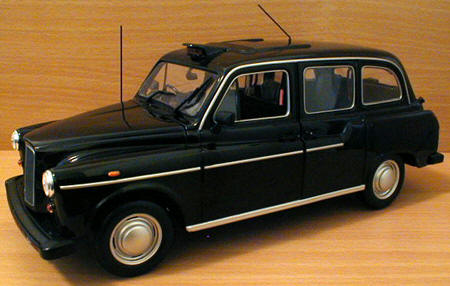
Most commonly known as a Black Cab (as they all painted black)
or London Taxi. This term covers all cabs with a yellow light on, indicating they are for hire,
which can be
flagged down in the street. These types of cabs can be mostly
found in London (where they are all black taxis), but also in
some larger cities in the UK, where you will find them queuing
at a taxi rank. These taxis run on a meter.
Minicabs
There are also licensed taxis (minicabs) available for hire in
all towns and cities. You will have to book these in advance by
phone. These will charge a fee usually determined by cost per
mile. You will find the phone number for the licensed taxi firms
in the
local telephone directories under Taxi. These taxis cannot be flagged down
on the street.
All licensed taxi drivers will have their ID card on view in the
taxi. There are also some unlicensed taxis operating
illegally in the UK, particularly in London. It is recommended
that you do not get into an
unlicensed taxi as they are not covered by insurance and some
are also risky as far as personal safety is concerned,
especially if you are a lone female.
p
Back to Top
|